

Trios Intraoral Scanner vs Traditional Impressions
Trios Intraoral Scanner
Accurate impressions are key in dentistry. The Trios Intraoral Scanner brings precision and comfort, leaving traditional methods behind.
A New Era in Dentistry
In the evolving field of dentistry, accurate impressions are paramount for successful treatments. Traditionally, dental impressions involved physical impressions, but technological advancements have introduced digital methods, such as the Trios Intraoral Scanner.
Traditional dental impressions have been a cornerstone in dentistry for decades. The process involves using materials like alginate, polyvinyl siloxane, or polyether to create a physical impression of patient’s teeth and gums. These impressions are used to make moulds and are then used to fabricate crowns, bridges, dentures, and orthodontic appliances.

Evolution of Intraoral Scanners
Intraoral scanners represent a significant leap in dental technology. The development of digital scanning began in the early 2000s, with continuous advancements improving their accuracy and ease of use. The Trios Intraoral Scanner, developed by 3Shape is a world leader in this technology revolutionizing the way dental impressions are taken.
Material and Equipment for Traditional Impressions
Traditional impressions require various materials and tools, including impression trays, mixing bowls, and impression materials. The process can be time-consuming and messy, often requiring multiple steps to ensure an accurate impression.
Technology and Features of Trios Intraoral Scanner
The Trios Intraoral Scanner utilizes advanced optical technology to capture detailed 3D images of a patient’s oral cavity. It features high-resolution imaging, real-colour scans, and software that integrates seamlessly with dental CAD/CAM systems. This technology eliminates the need for physical impressions, providing a more efficient and accurate alternative.
Uses of Traditional Impressions
Traditional impressions are widely used in various dental procedures, including:
- Fabrication of crowns, bridges, and dentures
- Orthodontic treatment planning
- Implant placement
- Bite registration
Uses of Intraoral Scanners
Intraoral scanners like the Trios are versatile tools in modern dentistry, used for:
- Digital impression taking for crowns, bridges, and dentures
- Orthodontic scans for aligners and braces
- Implant planning and placement
- Monitoring of dental wear and disease progression
Advantages of Traditional Impressions
- Proven and well-understood method
- No need for advanced technology or training
- Cost-effective for practices with limited resources
Advantages of Trios Intraoral Scanner
- High accuracy and precision
- Enhanced patient comfort and experience
- Faster turnaround time for dental restorations
- Digital integration with other dental technologies
- Reduced risk of errors and need for retakes
Accuracy and Precision
Accuracy of Traditional Impressions
Traditional impressions can be highly accurate when performed correctly, but they are prone to distortions and errors if not handled properly.
Accuracy of Intraoral Scanners
The Trios Intraoral Scanner offers superior accuracy, capturing detailed digital impressions that are less prone to errors and distortions compared to traditional methods.
Patient Comfort and Experience
Comfort Level with Traditional Impressions
Patients often find traditional impressions uncomfortable due to the need to hold trays in their mouths for extended periods, leading to gagging and discomfort.
Comfort Level with Intraoral Scanners
Intraoral scanners provide a more comfortable experience, eliminating the need for bulky impression trays and reducing the time patients need to keep their mouths open.
Time Efficiency
Time Taken for Traditional Impressions
Traditional impressions require multiple steps, including mixing materials and waiting for it to set which can be time-consuming.
Time Efficiency with Intraoral Scanners
The Trios Intraoral Scanner streamlines the process, capturing digital impressions quickly and efficiently, significantly reducing chair time.
Direct Comparison of Traditional Impressions and Trios Intraoral Scanner
When comparing traditional impressions to the Trios Intraoral Scanner, the digital method consistently outperforms in accuracy, patient comfort, and efficiency. Traditional impressions, however, remain relevant for certain cases and practices with limited access to digital technology.
Patient Satisfaction
Satisfaction Rates with Traditional Impressions
Patient satisfaction with traditional impressions can vary, with discomfort and gagging being common complaints.
Patient Satisfaction with Intraoral Scanners
Patients generally report higher satisfaction with intraoral scanners due to the quick, comfortable, and non-invasive nature of the digital scanning process.
Superior Accuracy, Patient Comfort, and Efficiency
In the debate between the Trios Intraoral Scanner and traditional impressions, it is clear that each method has its own set of advantages and limitations. Traditional impressions remain a valuable tool in dentistry . However, the Trios Intraoral Scanner stands out for its superior accuracy, patient comfort, and efficiency, making it a compelling choice for modern dental practices.
Contact Us Today
If you are looking for a dentist in Bundaberg, contact East Side Dental today. We will be happy to answer your questions and discuss your dental needs.
Contact:
Phone: (07) 4151 7305
You might be interested in:
Definition of Dental Terminology
Intraoral Scanner (IOS)
A handheld device that uses optical technology to capture a direct, digital 3D representation of the patient’s teeth and soft tissues. The TRIOS is a leading brand of IOS.
Scan Body / Scan Post
A small, precision-machined metal component that is screwed into a dental implant. The scanner recognizes its specific geometry, allowing the software to virtually determine the exact position, angle, and depth of the implant.
Alignment / Stitching
The software process of combining multiple individual scans (e.g., of the upper arch, lower arch, and bite) into a single, aligned, and accurate digital model.
Impression Tray
A rigid or flexible device, either stock or custom-made, that holds the impression material as it is placed in the patient’s mouth.
Setting Time
The time required for the impression material to change from a plastic state to an elastic solid. Includes: Working Time: Time to mix and load the tray. Setting Time: Time in the mouth for it to harden.
Bite Registration
A record of how the upper and lower teeth fit together. Can be made with wax, silicone, or PVS materials. In digital terms, this is the “bite scan.”
Frequently Asked Questions (FAQ)
1. What are the main differences between the Trios Intraoral Scanner and traditional impressions?
The main differences include accuracy, patient comfort, time efficiency, and hygiene. The Trios Intraoral Scanner provides more accurate digital impressions, is more comfortable for patients, takes less time, and has better hygiene compared to traditional impression methods.
2. How do intraoral scanners improve patient comfort?
Intraoral scanners eliminate the need for bulky impression trays and reduce the time patients need to keep their mouths open, making the process more comfortable and less invasive.
3. Can traditional impressions be as accurate as digital impressions?
While traditional impressions can be highly accurate when performed correctly, they are more prone to distortions and errors compared to the precise digital impressions captured by intraoral scanners.
4. Can intraoral scanners be used for all types of dental impressions?
Intraoral scanners are highly versatile and can be used for a wide range of dental impressions, including crowns, bridges, aligners, and more. However, certain cases may still require traditional impression methods.
5. Are patients generally more satisfied with intraoral scanners compared to traditional impressions?
Yes, patients generally report higher satisfaction with intraoral scanners due to the quick, comfortable, and non-invasive nature of the digital scanning process.
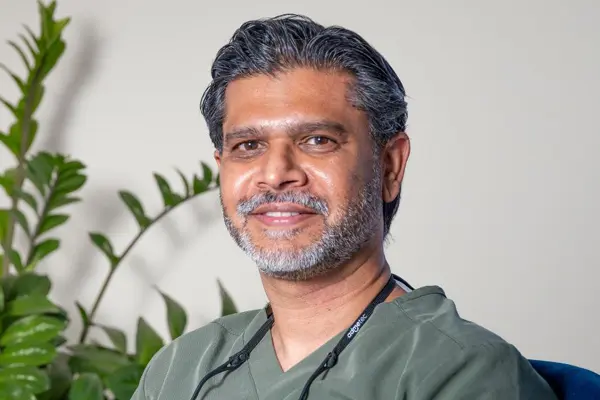
About Dr. Ajay
Dr. Ajay is a member of the Australian Dental Association and Australian Society of Implant Dentistry. Dr. Ajay keeps abreast with the advances in dentistry by attending course and lectures in Australia and around the world. Furthermore, as a practicing dentist, he loves to listen to your questions, concerns and explain all your treatment options. Call (07) 4151 7305 for an appointment.